Non-prescription weight-loss peptides: what people are buying, what they report, and why it is not Ozempic

The short answer
What gets sold as a 'non-prescription' weight-loss peptide includes 5-Amino-1MQ, MOTS-c and gray-market retatrutide, often labeled 'research use only.' None is an approved drug. 5-Amino-1MQ and MOTS-c have mouse data but no human weight-loss results; retatrutide has strong trial results but is investigational. Approved GLP-1 drugs such as Wegovy require a prescription.
Search for weight-loss peptides you can get without a prescription and you land in a strange corner of the internet. The products have the vocabulary of medicine, with milligram strengths, mechanisms and study citations, but the labels often say “research use only.” The names that come up most are 5-Amino-1MQ, MOTS-c and retatrutide, and buyers talk about them in the same breath as Ozempic and Zepbound. They are not the same kind of thing. This page looks at the category from the buyer’s side: what is actually being sold, how much evidence sits behind each compound, what people report back, what lab tests of no-prescription weight-loss products have found, and why “peptide” on a label tells you so little.
What are people buying as “non-prescription” weight-loss peptides?
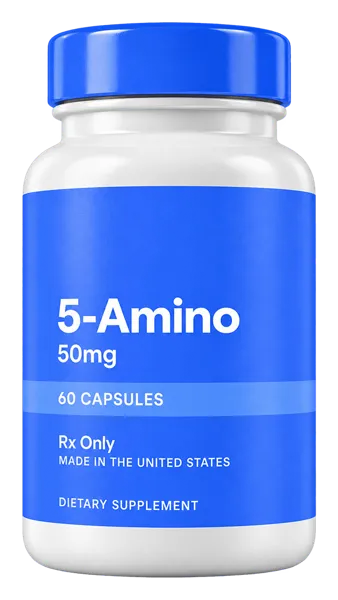
The compounds sold this way fall into two groups: research compounds with mouse data, such as 5-Amino-1MQ and MOTS-c, and an investigational drug, retatrutide, that buyers obtain before any approval. Some sellers also list unbranded semaglutide in vials. What ties the category together is the label, not the chemistry: many of these products are marked “for research purposes” or “not for human consumption” while being bought for weight loss.
That label gap shows up in the research. A 2024 test-purchase study in the Journal of Medical Internet Research found a split personality on the seller side: vials and logos suggested a laboratory product labeled “research use only,” while most product descriptions emphasized weight loss, appetite reduction and other health benefits.
Two of the three names on most lists are not even the same kind of molecule. MOTS-c is a 16-amino-acid peptide (Lee et al., 2015). 5-Amino-1MQ is a small-molecule enzyme blocker, not a peptide at all (Neelakantan et al., 2018). Retatrutide is a peptide drug still in clinical trials.
Are peptides the same as Ozempic?
No. Ozempic and Wegovy contain semaglutide, which is a peptide, but most products sold as weight-loss “peptides” are not semaglutide and do not work the way it does. The Wegovy label describes semaglutide as a glucagon-like peptide-1 (GLP-1) receptor agonist approved, alongside diet and activity, to reduce excess body weight and keep it off. MOTS-c and 5-Amino-1MQ act on different pathways and have not been through the large human trials semaglutide passed.
The word “peptide” is doing a lot of marketing work here. It lets a mouse-stage compound sit on the same shelf, in the buyer’s mind, as a drug tested in thousands of people. Sorting by evidence instead of by label is the single most useful thing a buyer can do.
How do the main listings compare with approved GLP-1s?
The table puts the three compounds buyers ask about most next to semaglutide, the approved GLP-1 most people mean when they say “Ozempic.” The evidence column states, in words, what kind of study sits behind each one.
| Compound | What it is | Form it is usually sold in | Evidence level | Human weight-loss result | Approval |
|---|---|---|---|---|---|
| 5-Amino-1MQ | Small-molecule NNMT inhibitor, not a peptide | Oral tablet | Cell and mouse studies only | None; no registered human trials found | No |
| MOTS-c | 16-amino-acid mitochondrial peptide | Injectable | Mostly animal and cell studies; one human trial recruiting | None yet | No |
| Retatrutide | Investigational GIP, GLP-1 and glucagon peptide | Injectable | Large human trials; phase 3 results announced by the maker | Up to 20.8% and 22.6% average loss at 80 weeks in two phase 3 trials (Eli Lilly, July 23, 2026) | No; investigational |
| Semaglutide (Wegovy, Ozempic) | GLP-1 receptor agonist peptide drug | Weekly injection or pill | Approved drug, labeled use (Wegovy for weight) | -14.9% vs -2.4% on placebo at 68 weeks (Wilding et al., 2021) | Yes; prescription only |
The gap between the rows is the point. Two of the four have no human weight-loss result at all. The third has impressive results but is not an approved product, so whatever a buyer receives under its name was not made under the maker’s controls. Only the last row is a medicine with a label, and it is the one that needs a prescription. The modernweightmedicine guide to peptides for weight loss ranks the wider field, including tirzepatide and the oral GLP-1 pills, on the same evidence scale.
What does the evidence show for each compound?
The short version is one mouse paper, one recruiting trial and one investigational drug with strong results. Here is what each study actually measured.
5-Amino-1MQ: cell and mouse studies only. In the founding study, obese mice injected with the compound three times a day for 11 days lost 5.1% of body weight while untreated controls gained 1.4%; food intake did not differ between the groups, and the authors read the effect as metabolic rather than appetite-driven (Neelakantan et al., 2018). Note the route: the mice got injections under the skin, while the compound is usually sold as an oral tablet. A search of the ClinicalTrials.gov registry on October 12, 2026 for “5-amino-1MQ” returned no registered studies. The Treatment Report’s 5-Amino-1MQ overview covers the chemistry and the full animal record.
MOTS-c: mostly animal and cell studies. The 2015 discovery paper reported that MOTS-c treatment in mice prevented age-dependent and high-fat-diet-induced insulin resistance, as well as diet-induced obesity, acting mainly on skeletal muscle. The only MOTS-c treatment trial we found registered on ClinicalTrials.gov (searched October 12, 2026) is a placebo-controlled phase 2 study of about 120 adults with prediabetes and overweight or obesity that began in February 2026 and is still recruiting; its primary outcomes are insulin sensitivity at 12 weeks and adverse events, not weight, and it has no results yet (ClinicalTrials.gov, NCT07505745).
Retatrutide: large human trials, not approved. Lilly reported in July 2026 that in TRIUMPH-2, adults with obesity or overweight and type 2 diabetes lost up to an average of 20.8% of body weight at 80 weeks, and in TRIUMPH-3, adults with severe obesity and heart disease lost up to 22.6% (Eli Lilly, July 23, 2026). Those are company topline announcements. The same release calls retatrutide an investigational molecule and says Lilly plans to submit it for U.S. approval in Q1 2027.
What do buyers report back?
Buyers report divided verdicts on MOTS-c, frustration with approved drugs as the reason for trying retatrutide, and very little about product testing. These are anecdotes, not evidence, and our data covers MOTS-c only.
Our MOTS-c Community Insights summary analyzed 19 public posts on X from July 16 to 19, 2026. The themes that matter to a buyer:
- Divided verdicts. Some posters call MOTS-c part of a fad cycle that people copy from each other; one who expected to dismiss it said he changed his mind after more than a month of daily use.
- Tolerability talk is thin. One user reported no allergic reaction after switching to it; overall, side-effect discussion in the pool was small.
- Quality by reputation. Users credit particular suppliers with quality while offering little or no detail on purity testing or verification.
For retatrutide, the clearest buyer picture comes from reporting rather than our own data. The Guardian’s August 2026 piece described people who had maxed out on Zepbound and still not reached their target weight, or who wanted to switch after side effects such as constipation on other drugs, along with people who simply like being early. Their sources included overseas online sellers and companies marketing the drug for “research use only.” We have not built a community dataset for 5-Amino-1MQ, so we do not characterize what its buyers say.
Set against the evidence, the pattern is familiar. The confidence in the posts runs well ahead of the data, and the quality question that the lab studies below raise barely comes up.
What have lab tests of no-prescription weight-loss products found?
A published test-purchase study of no-prescription weight-loss peptides found scams, wrong amounts and very low purity. The evidence level is narrow: it covers semaglutide bought from six online sellers in 2023, not the newer compounds, but it is a direct look at this market.
In that JMIR study, researchers picked the sellers that showed up most in search results, sold without a prescription and sat in the lowest price range. Half of the six purchases were non-delivery scams, including fake couriers asking for extra customs fees. The three vials that did arrive claimed 99% purity and measured between 7.7% and 14.37%, while holding 28.56% to 38.69% more semaglutide than the label stated. None of the six sellers asked for a prescription or any health information. The authors classified every delivered vial as a probable substandard and falsified product.
That study does not tell you what is in any particular vial of MOTS-c or retatrutide. It does show that “99% pure” on a listing is a claim, not a measurement, in exactly the market these products are sold in.
Are peptides safe for weight loss?
It depends on which “peptide” you mean. The approved GLP-1 drugs have known, labeled risks studied in thousands of people. For 5-Amino-1MQ and MOTS-c there is no completed human safety record, so their safety for weight loss is unknown, and gray-market retatrutide adds uncertainty about what is actually in the vial.
What the data does show:
- Retatrutide side effects in the July 2026 trials were mostly gastrointestinal. In TRIUMPH-2, diarrhea affected 27.4% to 33.6% across doses against 13.2% on placebo, and nausea 13.7% to 28.0% against 8.0% (Eli Lilly, July 23, 2026). Those figures describe the maker’s product in a supervised trial, not something bought online.
- 5-Amino-1MQ produced no overt signs of toxicity or adverse behavioral effects in obese mice over 11 days (Neelakantan et al., 2018), which is not a human safety profile.
- MOTS-c has no completed human treatment trial with published results; the recruiting trial lists adverse events as a primary outcome (NCT07505745). Our sister site’s page on MOTS-c side effects collects what has been reported.
Product quality is its own layer of risk. FDA warns that products made outside the regulated supply, such as counterfeit Ozempic, could contain too little, too much or no active ingredient at all, and an endocrinologist quoted by the Guardian said gray-market buyers do not know how much drug a product contains or how pure it is.
Can you buy peptides over the counter?
Not as approved medicines. The approved GLP-1 drugs carry prescription labels (Wegovy label), and the compounds sold without one reach buyers either as compounded prescriptions through some telehealth providers or as products labeled “research use only.” The hub’s peptide status explainer defines each of those terms in plain language.
How do people get peptides for weight loss?
People get them through three routes that differ mainly in who checks the product and the patient. An approved GLP-1 drug comes through a prescriber and a licensed pharmacy. Compounds such as MOTS-c and 5-Amino-1MQ are offered by some telehealth providers as compounded prescriptions. And a large share of the gray market runs through websites that ask for no prescription at all.
FDA’s guidance for consumers draws the line in simple terms: a safe online pharmacy always requires a doctor’s prescription, lists a U.S. address and phone number, has a licensed pharmacist to answer questions and is licensed with a state board of pharmacy. A seller that skips the prescription step is, by FDA’s list, showing its first warning sign. Our explainer on how compounded peptide prescribing works walks through the telehealth route step by step.
Where do people buy peptides for weight loss?
People buy them from telehealth services that prescribe and ship from a pharmacy, from “research use only” websites, and from no-prescription storefronts that look like pharmacies. The useful question is not which one is cheapest but which one can answer for what is in the vial. A prescription step, a pharmacy license you can look up and a batch-specific test from a named independent lab are the three things worth asking for.
Our buyer’s guide to peptide sellers and formats compares those seller types side by side, and the vendor legitimacy checklist scores a specific seller against the red flags buyers run into.
What is the best place to buy peptides online for weight loss?
The best place is the one that can show you what it is selling, which is a different test from rankings or reviews. On the evidence above, a seller that requires a prescription and dispenses through a state-licensed pharmacy sits at the careful end; a seller with real batch testing but a “research use only” label sits in the middle; a no-prescription site that mimics a pharmacy sits at the bottom. We do not rank named vendors, because a ranking cannot check a vial.
Retatrutide deserves a separate note. Its maker still describes it as an investigational molecule, so whatever a listing says, no seller is offering Lilly’s product.
What does price tell you about a weight-loss peptide?
Very little about quality, and deep discounts or prices that seem too good to be true are on FDA’s own list of online-pharmacy warning signs. In the JMIR test purchases, the researchers deliberately chose the cheapest, most visible no-prescription sellers, and that is where they found purity under 15% and three non-deliveries out of six orders (Ashraf et al., 2024). Paying more does not fix the evidence gap either: no price buys human weight-loss data for a compound that has only been tested in mice. For what supervised peptide and GLP-1 care costs, the hub keeps a dated cost explainer.
Status: 5-Amino-1MQ and MOTS-c are not FDA-approved; some telehealth providers sell them as a compounded prescription, and an FDA advisory committee reportedly voted in July 2026 to recommend allowing pharmacies to compound MOTS-c, though nothing has changed yet. Retatrutide is investigational and not FDA-approved; Lilly plans to submit it for approval in Q1 2027. What these status terms mean.
The honest bottom line
“Non-prescription weight-loss peptide” describes a shopping category, not a kind of medicine. Inside it are a small molecule with one mouse paper, a mitochondrial peptide whose one registered human treatment trial is still recruiting, and an investigational drug whose real-world version nobody is vouching for. The approved GLP-1 drugs sit outside the category for a reason: they have the trials, the label and the prescription step. If you are weighing any of these, ask what species was studied, what was measured and who answers for the vial, and talk it through with a clinician who knows your history.
Educational information only, not medical advice. Research statements are sourced to the peer-reviewed studies, FDA documents, trial registries and company announcements linked above; the community section summarizes public posts on X analyzed in July 2026 and is not evidence. Accurate as of October 12, 2026.
Sources (11)
Advertising disclosure: links marked "Paid link" go to Bodybuilding Peptides (trybbpeptides.com), an affiliate destination, and Peptides in Review may earn a commission if you buy there. Our coverage is independent of that relationship, and nothing on this page is medical or legal advice.
 See it at Bodybuilding Peptides