Compounding pharmacy peptides like BPC-157 after the HHS draft policy: what changes for buyers, and what stays the same

The short answer
For a buyer, the draft HHS policy filed on October 28, 2026 changes one path and leaves the other alone. It describes conditions under which HHS does not intend to act against licensed compounding of six single peptides on a patient-specific prescription. It does not cover research-use-only sellers, blends or any other peptide, it is not FDA approval, and state rules still apply.
Key takeaways
- The draft HHS policy filed October 28, 2026 covers six single peptides only: BPC-157, epitalon, KPV, MOTS-c, semax and TB-500.
- It describes when HHS does not intend to act against licensed compounding on a patient-specific prescription. It is a non-binding draft, and it is not FDA approval.
- Research-use-only sellers are not covered, and neither are blends such as Wolverine, GLOW or KLOW, because only single-ingredient products qualify.
- Appendix B sets route limits for each of the six, so a format outside those limits is outside the draft.
- State rules still apply, and Mississippi and Louisiana already point in opposite directions.
News, filed October 28, 2026
This page covers a draft federal policy filed for public inspection on October 28, 2026, with Federal Register publication scheduled for October 30, 2026. It is a buyer’s reading, not legal advice. For the full policy, the timeline and the agency background, see our network’s complete explainer.
For people who buy peptides, the draft policy HHS filed on October 28, 2026 matters for one path and is silent on the other. It describes when HHS does not intend to take enforcement action against a state-licensed pharmacy, federal facility or licensed physician compounding one of six peptides, alone, under a list of conditions (FR Doc. 2026-22192). It does not cover research-use-only sellers, it does not cover blends, and it is not an FDA approval. This page reads it the way this site reads everything: as a buyer deciding who to trust with what goes in the vial.
What changed for buyers on October 28, 2026?
What changed is that a pharmacy path now has a draft federal enforcement position written down behind it, for six peptides only. The six are BPC-157, epitalon, KPV, MOTS-c, semax and TB-500, listed in Appendix A of the HHS policy document. The Federal Register notice calls it a draft, says it “is not binding on HHS or the public”, and says HHS may revisit it if a safety signal or product quality issue arises.
Three things did not change, and they matter more to a buyer than the headlines suggest:
- Nothing became FDA-approved. Both documents state that compounded drugs are not FDA-approved, which means FDA does not review their safety, effectiveness or quality before they are marketed.
- The research-use-only market is not covered. HHS frames the policy as an alternative to it. Its stated aim is to “discourage the continued, widespread use of certain research-use-only peptides supplied by foreign manufacturers” and to give patients “a more controlled alternative”.
- No date is set for when it applies in practice. The documents give a filing date (October 28) and a scheduled publication date (October 30), and nothing beyond that. AP reports the Alliance for Pharmacy Compounding said it is unclear when the policy takes effect.
So the useful question for a buyer is not “is it allowed now?” but “which seller could meet these conditions, and which one never will?”
How does the pharmacy path differ from a research-use-only seller now?
The pharmacy path now comes with a specific checklist, and a research-use-only seller sits outside it entirely. We have compared the two paths before in prescribed versus gray-market peptides; the draft sharpens that comparison rather than replacing it.
| Question a buyer asks | Pharmacy path under the draft (six peptides only) | Research-use-only seller |
|---|---|---|
| Who is selling? | A state-licensed pharmacy, federal facility or licensed physician | A website selling material labeled not for human use |
| Is a prescription involved? | Yes, section 503A’s patient-specific prescription requirement still applies | No |
| Where must the raw material come from? | An FDA-registered, CGMP-compliant manufacturer, location shown on the certificate of analysis | Not documented by any federal condition |
| Is testing defined? | A valid certificate of analysis meeting the testing criteria in Appendix B | Whatever the seller chooses to post |
| Can it be a blend? | No, a single active ingredient only | Often sold as blends or stacks |
| Is the route limited? | Yes, by peptide (see below) | No limit beyond the listing |
| Is anyone reporting problems? | Products, serious adverse events and quality issues reported to FDA’s MedWatch and to the states | No reporting duty |
| Covered by the draft? | Yes, if every condition is met | No |
The policy itself says research-use-only peptides “pose a safety risk to US patients”. It does not, in its own words, call them unlawful, and neither do we on its strength. Our longer guide on what research use only actually means explains why that label is a disclaimer, not a quality grade, and that explanation is unchanged.
What should a compounded peptide come with under the draft?
A compounded peptide that fits the draft should be able to show a paper trail you can ask about. These are the conditions from the HHS document, rewritten as the questions a buyer can put to a prescriber or pharmacy:
- Is it one of the six, in an allowed form? The peptide must be in Appendix A and match the identity and route limits in Appendix B.
- Where was the raw peptide made? The bulk substance must come from a manufacturer registered with FDA under section 510 and operating under CGMP, with its location on the certificate of analysis. A repacker or reseller in between must have documented validation of that manufacturer.
- Is there a valid certificate of analysis? Appendix B sets out a testing standard covering identity, purity, potency, endotoxin, microbial limits, impurities and heavy metals. Our guide on how to read a peptide COA covers what those lines look like on paper.
- Is it a single ingredient? The policy says the product “contains only a single Active Pharmaceutical Ingredient (API) listed in Appendix A.”
- If it is oral, is absorption documented? Oral forms need documentation that the specific formulation “achieves an adequate level of oral bioavailability in humans.”
- What device comes with it? The only co-packaged device allowed is an FDA 510(k)-cleared syringe.
- What does the label say? “This is a compounded drug product. Not for resale.”
- Is there a prescription for you, specifically? Section 503A’s patient-specific prescription requirement still applies, along with the rest of the federal drug law.
Pharmacies also have to report what they compound, plus serious adverse events and quality problems, to FDA and to the states involved. That is not something a buyer can check, but it is a real difference from a seller with no reporting duty at all.
Which routes does the draft allow for each of the six?
Each of the six has its own route limits, and not all six are injectables. These come from Appendix B of the HHS document:
| Peptide | Routes in Appendix B |
|---|---|
| BPC-157 | Subcutaneous, intramuscular, oral, topical |
| TB-500 | Subcutaneous or intramuscular injection |
| MOTS-c | Subcutaneous or intramuscular injection |
| Epitalon | Subcutaneous or intramuscular injection, in intermittent courses |
| Semax | Intranasal only |
| KPV | Topical and oral only |
For a buyer, the practical reading is that a format outside these limits is outside the draft. Oral epitalon, injectable semax and injectable KPV are not among the routes Appendix B lists. Our comparison of oral, injectable and nasal peptides covers why format matters beyond the paperwork.
Are blends like Wolverine or GLOW covered?
No. The draft covers single-ingredient products only, so no blend or stack qualifies. The PDFs do not name any blend; this is our application of the single-ingredient condition to the blends buyers ask about most:
- Wolverine (BPC-157 + TB-500): two active ingredients, so not covered, even though each is one of the six on its own.
- GLOW (GHK-Cu, BPC-157, TB-500): more than one ingredient, and GHK-Cu is not one of the six. Not covered.
- KLOW (GLOW plus KPV): same answer as GLOW.
This lines up with something buyers were already saying before the draft. In our Community Insights summaries of public posts on X from mid-July 2026, some TB-500 buyers described moving away from pre-mixed stack vials toward single peptides, and tied blends to labeling worries about whether the vial held the TB-500 fragment or full-chain thymosin beta-4. Those are anecdotes, not evidence, but the draft’s single-ingredient condition points the same way.
Which peptides are not covered at all?
Every peptide outside the six is not covered, because only Appendix A peptides are. That includes several that buyers on this site ask about often: CJC-1295, ipamorelin, selank, DSIP, LL-37, AOD-9604, thymosin alpha-1, melanotan II, PEG-MGF, dihexa and injectable GHK-Cu, as well as tesamorelin, retatrutide and 5-Amino-1MQ. The documents do not name them; they are simply absent from the list. For any of these, the federal position is what it was before October 28. Our guide to weight-loss peptides sold without a prescription covers several of them in buyer terms.
Do state laws still apply?
Yes. The federal draft does not change state rules, and they vary. Two examples show how far apart states already are:
- Mississippi. On August 19, 2026, the state’s boards of nursing, pharmacy and medical licensure jointly stated that “Under no circumstances is it permissible for a healthcare provider to compound, administer, or dispense a non-FDA approved or research-grade peptide to a patient” (joint statement). How the boards will treat compounding under the federal draft is not known.
- Louisiana. Act 374, effective August 1, 2026, goes the other way: it bars licensing boards from prohibiting prescribers from providing peptides from a compliant 503A pharmacy or 503B outsourcing facility, and from prohibiting pharmacists from compounding peptides in compliance with federal law and USP standards (resume digest).
Reuters quoted Jeff Cohen of the American Peptide Association saying states may not follow the federal lead. A buyer’s working rule: a federal enforcement position does not override what your own state’s boards say.
Does a pharmacy label change anything for athletes?
No. The draft says nothing about sport. BPC-157 is prohibited under the World Anti-Doping Agency’s S0 class (USADA) and TB-500 is named under S2. A compounded product with a pharmacy label tests the same as any other. If you compete under a tested code, check the current WADA list for any peptide before you take it.
How have buyers and commentators reacted?
We have not yet summarized buyer posts written after October 28, so this section has two parts: what buyers were already saying in July, and what named commentators told the press. Before the July 23-24 advisory committee meeting, posts in our Community Insights summaries for BPC-157, epitalon, KPV, semax, MOTS-c and TB-500 kept making the same point: this was a decision about access through compounding pharmacies, not an approval vote and not proof that any peptide works. Several posters warned that markets and headlines would blur the two. That distinction is exactly where the draft landed.
Other July themes now read differently in light of the conditions:
- Epitalon buyers debated oral versus injectable use because oral absorption is described as poor. Appendix B lists epitalon for injection only, in intermittent courses.
- Semax users discussed which diluent to use for nasal sprays. Semax is intranasal only in Appendix B, which makes formulation a pharmacy question rather than a kitchen one.
- MOTS-c posts praised particular suppliers’ quality with little discussion of testing. The draft’s certificate-of-analysis condition is a much higher bar than a reputation.
- BPC-157 posts flagged contamination and measuring errors when people reconstitute vials at home. The draft’s conditions focus on the raw material, testing, labeling and reporting; they do not address home handling.
Among named commentators, the press record is split. Lee Rosebush of the American Academy of Peptide Medicine called it “a huge step for patient and provider medical freedom” (AP, which notes the group is not a medical professional society). Scott Brunner of the Alliance for Pharmacy Compounding called it a “more accountable alternative” but said dispensing may take time (NPR).
On the critical side, Peter Lurie of the Center for Science in the Public Interest said FDA was “turning a blind eye” (NBC), and Shabbir Safdar of the Partnership for Safe Medicines warned of “untested dangerous substances” (NBC, NPR). Appendix B itself records the split inside government: for all six, FDA’s drug center recommended against listing and the advisory committee voted in favor.
Can I buy BPC-157 from a compounding pharmacy yet?
Not on the strength of the draft alone, and not without a prescription. The policy has been filed, not published, no date is given for when it applies in practice, and the compounding trade group says dispensing may take time. Even once pharmacies can meet the conditions, BPC-157 under the draft is a single-ingredient, prescription-only product from a registered source with a valid certificate of analysis, in an allowed route. Our BPC-157 buyer’s guide covers the evidence behind it, which this policy does not change: it is an enforcement position, not an evidence review.
What should I ask a seller this week?
Ask the same five questions as before, plus the ones the draft now makes concrete. Our framework for what to ask before you buy any peptide still holds. Add these:
- Is this one of the six, as a single ingredient, in a route listed for it?
- Who manufactured the raw peptide, is that facility registered with FDA, and is it named on the certificate of analysis?
- Is there a prescription written for me by a clinician licensed in my state?
- What does my state’s licensing board say about compounded peptides?
A seller who answers “research use only” to any of these is telling you the draft does not apply to them. Our guide on how to tell if a peptide vendor is legit lists the other red flags.
What is still unknown?
Plenty, and a careful buyer should hold off on assuming any of it. Still open: whether and when the policy is finalized or treated as in effect; the exact comment deadline (written comments close two weeks after Federal Register publication, on docket HHS-OASH-2026-0496); how many pharmacies can meet the certificate, manufacturer, bioavailability and reporting conditions, and how soon; how state boards respond; and whether any HHS or FDA position on 503B outsourcing facilities follows.
Outsourcing facilities are not among the covered entities in the draft. This page reflects the public inspection copy filed October 28. The full policy background is in our network’s explainer on the HHS draft.
Status: BPC-157: Not FDA-approved. Under a draft HHS policy filed Oct 28, 2026, HHS does not intend to act against licensed compounding of it alone, under strict conditions: injection, oral or topical. Wolverine blend (BPC-157 + TB-500): Not FDA-approved. The draft HHS policy filed Oct 28, 2026 covers single-ingredient products only, so this two-peptide blend is not covered. Status explained.
Educational information and social commentary only, not medical or legal advice. Regulatory statements are sourced to FR Doc. 2026-22192 and the HHS policy with Appendices A and B, and are accurate as of October 28, 2026; community themes summarize public posts from July 2026 and are not evidence.
Frequently asked questions
Are peptides FDA approved?
The draft HHS policy does not make any peptide FDA-approved. Both the Federal Register notice and the HHS document state that compounded drugs are not FDA-approved, which means FDA does not review their safety, effectiveness or quality before they are marketed. The peptide status explainer lists the few peptides that are approved drugs.
Is BPC-157 FDA approved?
No. BPC-157 is not FDA-approved. Under a draft HHS policy filed Oct 28, 2026, HHS does not intend to act against licensed compounding of it alone, under strict conditions: injection, oral or topical.
Can doctors prescribe peptides?
For the six peptides in the draft, the path it describes is a state-licensed pharmacy, federal facility or licensed physician compounding on a patient-specific prescription. Section 503A's prescription requirement and the rest of federal drug law still apply, along with conditions on sourcing, testing, labeling and reporting. State licensing boards still have their own rules, which vary.
Are peptides legal to buy online?
The draft does not cover research-use-only websites; HHS frames the policy as an alternative to them and says such peptides pose a safety risk to US patients. It does not, in its own words, call them unlawful. For the legal status of each peptide, see the network's peptide status explainer.
When will peptides be FDA approved?
No date is set, and the draft is not an approval process. The Federal Register notice says FDA's future rulemakings may propose adding some or all of the six peptides to the 503A bulks list, which governs what pharmacies may compound. That list is separate from FDA approval, and it still contains no peptide.
Sources (10)
About the editorial team
Advertising disclosure: links marked "Paid link" go to Bodybuilding Peptides (trybbpeptides.com), an affiliate destination, and Peptides in Review may earn a commission if you buy there. Our coverage is independent of that relationship, and nothing on this page is medical or legal advice.
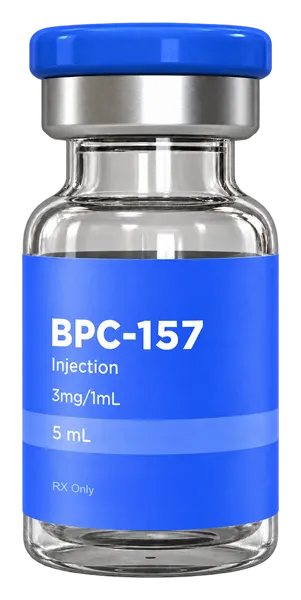 See it at Bodybuilding Peptides